

Best Horizontal Concealed Fan Coil Units for Quiet and Efficient Home Comfort
2026-11-01
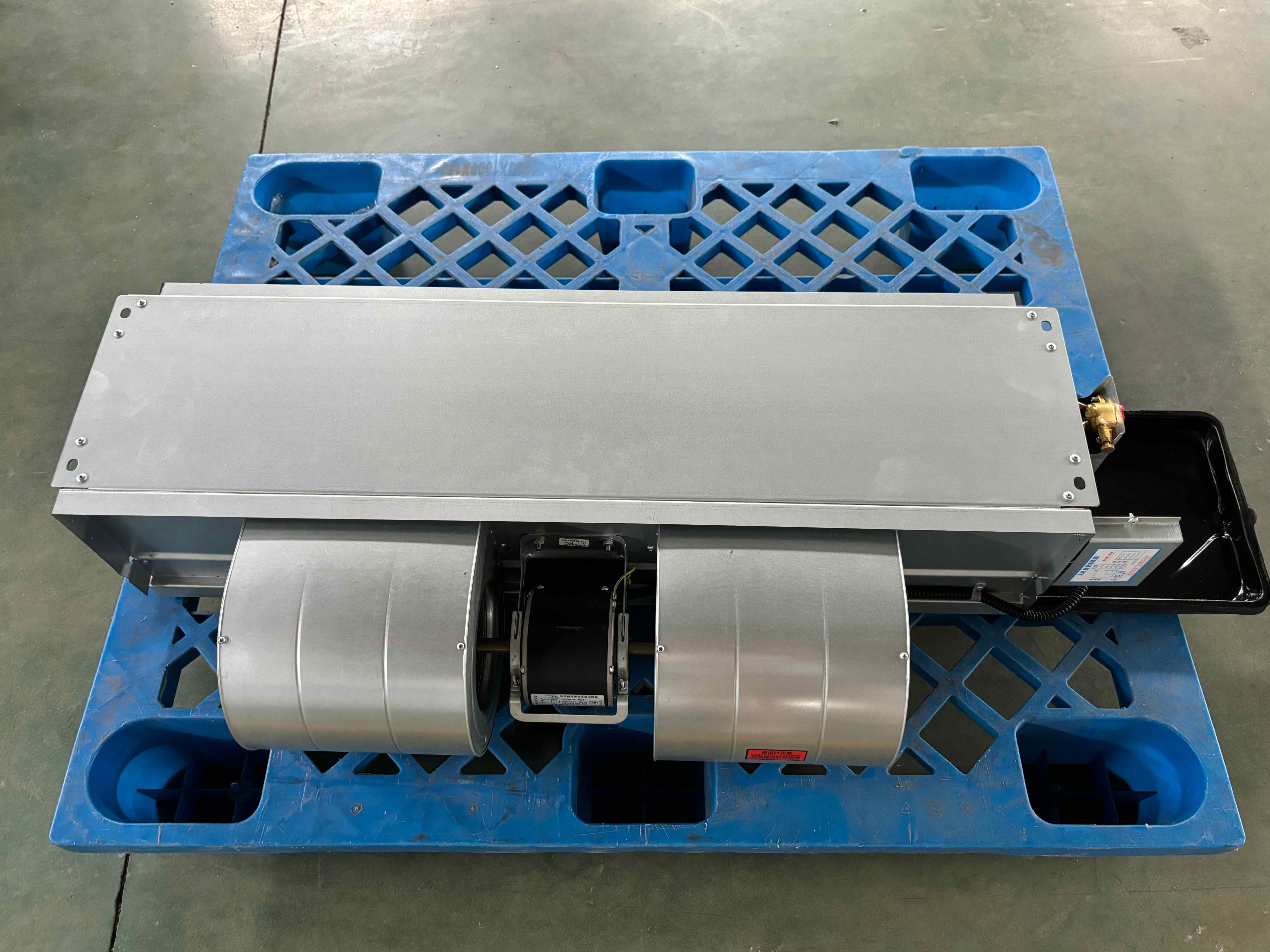
When it comes to maintaining a peaceful and comfortable home, the HVAC system you choose matters more than you might think. Loud, bulky units can ruin a quiet evening, while inefficient models drive up energy bills. Horizontal concealed fan coil units solve both problems by hiding neatly above ceilings or in soffits, delivering even airflow without visual clutter or noise. But not all of them are created equal. In this guide, we'll explore the best options for whisper-quiet operation and year-round efficiency, with a special focus on shairko units that consistently stand out for homeowners who refuse to compromise on comfort or aesthetics. Let's dive into what makes these systems a smart choice.
Why Hidden Placement Changes How You Experience Home Comfort
When you stop seeing the machinery of comfort, your attention shifts to how a room actually feels. Hidden vents, discreet thermostats, and tucked-away speakers remove the visual reminders of mechanical systems. That subtle change makes warmth, coolness, and sound feel like natural qualities of the space rather than features being forced into it.
Placement also alters the physical path of air and sound. A vent hidden along a soffit or baseboard can distribute air more evenly across a room, avoiding the strong drafts that come from a visible ceiling register aimed at one spot. Because the outlet is less obvious, designers tend to position it for performance rather than symmetry, which often results in fewer hot and cold zones.
There is a psychological side as well. Without visible grilles or equipment, a room reads as calmer and more intentional. Your eye rests on materials, light, and proportion instead of metal louvers and plastic covers. That quiet background allows you to notice comfort as a complete sensation—gentle warmth near the floor, a soft acoustic presence—without fixating on where it originates.
Decoding Decibel Ratings for Real-Life Quiet
A decibel rating never works in a straight line. The scale is logarithmic, so a jump from 30 dB to 40 dB doesn't just add a little noise—it can feel roughly twice as loud. That's why a bedroom measuring 32 dBA at night can seem almost silent, while a living room at 38 dBA starts to register the low press of a fridge or distant road. The number alone rarely tells you whether a space will feel quiet, because our ears pick up tonal whines, irregular clatters, and low-frequency drones with far more sensitivity than a single averaged figure suggests.
Context shapes the experience more than the raw figure. The same 35 dBA that fades into a busy daytime office can become an irritating presence at 2 a.m. in a still house. Rural nights often sit around 20 to 25 dBA, yet the occasional snap of a branch or a passing truck at 45 dBA feels louder than the city hum that never stops. If a product label promises 40 dB, ask where that measurement was taken and over what time window—quiet in a lab is rarely quiet in a kitchen with a ticking clock and a humming vent.
What matters most is not chasing the smallest digit but understanding what the rating leaves out. Look for dBA figures measured at a realistic distance, ideally with a mention of frequency peaks or tonal components. A soft broadband rustle at 30 dBA is far easier to ignore than an intermittent beep at the same level. Real-life quiet isn't just about hitting a low number; it's about how the sound behaves, when it appears, and whether your space can hold that stillness without sudden breaks.
Efficiency Claims Worth Your Attention (and Ones to Ignore)
Not every promise of greater productivity holds up under scrutiny. The ones worth your attention usually describe a concrete mechanism—like reducing handoffs between teams or automating a repetitive data-entry step—rather than vague talk of “streamlining.” If a claim doesn't explain what specifically gets faster or cheaper, treat it as noise. Real efficiency gains tend to show up in measurable places: fewer hours spent on a task, lower error rates, or shorter wait times between dependent steps.
On the flip side, be skeptical of anything that promises dramatic time savings without changing the underlying workflow. A new tool that adds another layer of coordination can actually slow things down, even if its marketing says otherwise. Watch out for terms like “10x productivity” or “effortless optimization”—they often hide hidden setup costs or ignore the fact that people need time to learn new systems. Pay attention instead to claims backed by before-and-after data from a similar environment to yours.
Finally, remember that efficiency isn't always about speed. Sometimes the most valuable improvement is consistency—knowing that a process will take the same amount of time every day, rather than occasionally blowing up. Claims that focus only on peak performance ignore the quiet value of predictability. If a vendor or tool can show you how it reduces variance and prevents the late-night scramble, that's a claim worth taking seriously.
Installation Details That Make or Break Performance
Torque sequence matters more than most installers admit. Applying full spec to one bolt before the rest are even snug can warp a flange, pinch a gasket, or leave micro-gaps that only show up under thermal cycling. Use a calibrated wrench, follow the cross pattern, and recheck after the first heat cycle—metal settles, and that’s where slow leaks and horsepower loss begin.
Pipe and hose routing is another silent killer. A run that’s too short transfers vibration into fittings; too long and it sags, chafes, or kinks under boost. Support brackets should be placed at natural vibration nodes, not arbitrarily. And don’t force a flex section to absorb misalignment—if you need a pry bar to line up flanges, the system will fight itself at full load.
And then there’s the stuff you can’t see after the covers go on: sensor orientation, connector locking, and heat shielding clearance. A knock sensor threaded in too deep changes its response curve. A connector not fully seated will drop signal under vibration. If a heat shield touches a wire loom, you’ve built a slow-burning failure that will surface at the worst possible time.
Simple Upkeep That Extends the Life of Your Unit
Most breakdowns don't happen overnight. They build up from small oversights—dust caked on a filter, a drain line slowly clogging, or a fan working harder than it should because nobody ever cleaned the fins. A quick monthly pass with a soft brush or a gentle vacuum attachment around the intake areas can stop that buildup before it becomes a repair bill. The same goes for any exposed coils: when they're clean, your unit doesn't have to strain to pull heat or push cold air, which is often the difference between a decade of steady service and a costly replacement halfway through that span.
You don't need a technician's toolkit for most of this. Check the condensate drain every couple of months, especially if you live somewhere humid. A little algae or mold can turn into a block that backs water up into the pan and then onto your floor. A cup of white vinegar poured down the line now and then keeps it clear without harsh chemicals. While you're at it, make sure the area around the outdoor section stays free of leaves, grass clippings, and anything else that restricts airflow. Even a few inches of clearance can make a measurable difference in how long the compressor lasts.
Think of it as brushing your teeth rather than waiting for a root canal. The same ten minutes you might spend scrolling on your phone can be redirected once a season to tighten a loose electrical connection, check that the thermostat reading matches the actual room temperature, and listen for any new rattles or hisses. Those sounds are early warnings, not quirks to ignore. Catching a failing capacitor or a slightly bent fan blade when it's still a $30 fix means you'll likely never have to write a four-figure check in the middle of a heat wave.
Features That Separate Genuinely Great Units from the Rest
Genuinely great units rarely announce themselves with flashy spec sheets. Instead, they show up in the quiet moments: the latch that still clicks after ten thousand cycles, the seal that doesn’t warp when temperature swings hard, the internal layout that lets you reach a filter without disassembling half the housing. These are not headline features, but they’re the ones that determine whether a unit becomes a daily workhorse or a source of low-grade frustration.
Another differentiator is how a unit behaves past its first year. Cheap construction tends to hide behind fresh-out-of-the-box performance, then falls off quickly. Great units hold their tolerances longer because the manufacturer didn’t treat every component as a place to shave cost. Pay attention to things like bearing quality, wire routing, and how well moving parts are shielded from dust and moisture. If those details look deliberate rather than accidental, the rest of the unit usually follows the same standard.
FAQ
It's a compact heating and cooling device hidden above ceilings or in bulkheads, often used in hotels, apartments, and offices where you want climate control without visible equipment. The horizontal orientation allows it to fit into tight ceiling voids and distribute air through short duct runs to a room.
Top models typically run between 20 and 35 decibels on low speed, which is quieter than a library. The concealed installation and insulated cabinet help muffle mechanical noise, but duct design and return air placement matter just as much as the unit itself.
Pay attention to the EC motor option and whether the unit can modulate airflow based on demand. High-efficiency coils with larger surface areas and electronic expansion valves also help part-load performance, which is where most operating hours happen.
Yes, most are designed for four-pipe systems or can be paired with a heat pump or boiler. A four-pipe setup gives you simultaneous heating and cooling in different zones, which is common in buildings with mixed sun exposure.
Expect to clean or replace the air filter every one to three months, and have the coil and condensate pan inspected annually. Because the unit is hidden, make sure the access panel is easy to reach and that the drain line is clear to prevent water damage.
You need a proper load calculation based on room area, window area, orientation, insulation, and occupancy. As a rough starting point, many residential spaces need about 30 to 40 BTUs per square foot, but oversizing can lead to short cycling and humidity issues, so it's better to trust a professional calculation.
A fan coil unit usually relies on a central chiller or boiler for hot and cold water, while a ducted mini-split is a self-contained refrigerant system. Fan coils are common in larger buildings with existing hydronic infrastructure; mini-splits are often simpler for single-room retrofits.
They work well in high-end residential projects, especially when you want invisible comfort with low noise. You'll need enough ceiling space and a place for the water piping, so they're more common in new construction or major renovations than in quick retrofits.
Conclusion
A horizontal concealed fan coil unit changes how comfort reaches a room because the hardware disappears above the ceiling or inside a soffit, leaving only a discreet grille. That makes noise behavior more important than a single decibel number on a spec sheet. Real quiet comes from how the motor ramps, how the blower wheel is balanced, and whether the cabinet and duct connections are rigid enough to avoid low-frequency hum. A unit rated at 28 dB(A) can still feel intrusive if airflow whistles through a poorly designed return, while a slightly higher rating with smooth, broadband sound can fade into the background. Efficiency claims deserve the same scrutiny: a high COP or EER at ideal lab conditions says little about part-load performance or static pressure losses. Look for evidence of efficient operation across a range of fan speeds, not just one peak number.
Installation often decides whether a good unit performs well. The drain pan must slope cleanly to the outlet, the access panel has to align with the filter and coil for service, and the supply duct should not make a sharp bend right off the discharge collar. Units with an insulated cabinet, a rigid blower housing, and a removable filter track make maintenance simpler: rinse the filter, check the coil once or twice a year, and clear the drain line before cooling season. The best horizontal concealed fan coils also use an electronically commutated motor, a thermal expansion valve or electronic expansion valve, and a control board that accepts a common thermostat signal without extra adapters. Those details separate a unit that runs quietly and efficiently for years from one that becomes a service headache after the first season.
Contact Us
Contact Person: Crystal
Email: [email protected]
Tel/WhatsApp: 8613524235353
Website: https://www.airkohvac.com