

China Compression Socks Company Buying Guide for International Buyers
2026-10-03
Sourcing compression socks from China isn't just about finding the lowest price—it's about finding a partner who understands your market's specific needs. For international buyers, the landscape is crowded, but a few companies stand out by blending technical expertise with export experience. Fuli Socks is one such name, offering a practical case study in what to look for. In this guide, we'll break down the essential criteria, from materials and compression levels to certifications and MOQs, so you can make a confident sourcing decision.
Factory Visits That Reveal More Than a Catalog
Walking onto a factory floor tells you things a glossy brochure never can. The rhythm of the machines, the way workers move around a half-finished product, the smell of metal and oil in the air—these details add up to a story about how a company actually operates. A catalog might show you the finished chair or valve or circuit board, but it won't show you the pause before a worker double-checks a weld, or the clutter of hand tools that suggests a team that trusts its own judgment over rigid process manuals.
In practice, a good factory visit rewards attention to the unscripted moments. Watch where supervisors spend their time: are they on the floor with a wrench in hand, or behind glass in an office? Listen for the frequency of alarm sounds or the idle chatter of a line that's been stopped for too long. These signals rarely make it into the marketing deck, yet they reveal far more about quality control, lead times, and a company's tolerance for inefficiency than any spec sheet. A buyer who skips the tour might save an afternoon, but they risk missing the real reason a supplier keeps winning—or quietly losing—orders.
And it's not just about spotting problems. Sometimes a factory visit uncovers a quiet strength that no one thought to advertise: an older machine retrofitted with a clever jig, a storage system that lets workers find parts without leaving their station, a shift change that happens without a single horn blast because everyone already knows the routine. Those are the details that make you trust a partner, not just a price. The catalog tells you what they make; the floor tells you how they think.
Why Compression Sock Samples Lie About Bulk Quality
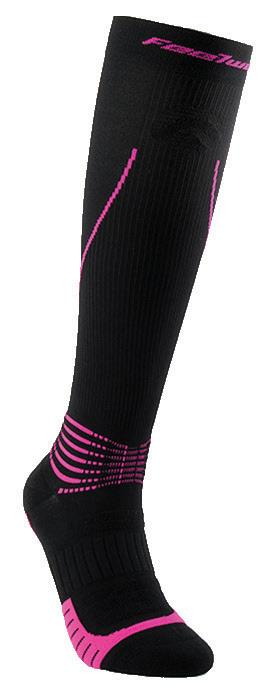
Ask any purchasing manager who has ordered compression socks in volume and they will tell you the same story. The sample pair feels dense, the knit pattern looks consistent, and the graduated pressure seems spot on when tested by hand. Then the shipment arrives and suddenly the socks are thinner, the compression zones drift, and the fabric pills after the first wash cycle.
The reason this happens is rarely discussed in supplier catalogs. Sample runs are often produced on slower, better-maintained machines with tighter quality controls. The yarn tension is adjusted manually, and the knitting speed is reduced to make sure every stitch lands exactly where it should. Bulk production, however, runs on high-speed circular knitting machines where minute variations in yarn feed, needle wear, and ambient humidity all stack up. By the time ten thousand pairs roll off the line, the accumulated drift can be significant enough to change the compression profile by 10 to 15 percent.
Smart buyers have learned to ask for a random carton pull from an actual bulk run, not a hand-picked sample. They also request the manufacturer's internal test data for pressure mapping at multiple calf and ankle positions, because a single-point measurement hides too many flaws. Without that level of scrutiny, the sample remains a promise that the bulk order never intended to keep.
Private Label Timelines Nobody Quotes Upfront
Most private label suppliers will hand you a tidy six-to-eight week production window without blinking. Then the real clock starts. Mold adjustments, packaging revisions, lab testing backlogs, and shipping bottlenecks rarely make it into that first cheerful estimate.
The timelines nobody quotes are the ones that actually derail launches: waiting for raw materials to clear customs, re-running stability tests because a lid didn't seal perfectly, or discovering the factory scheduled another brand's larger order right before yours. If a supplier refuses to put a date in writing for these hidden phases, treat that silence as the timeline itself.
Negotiating MOQs Without Sacrificing Stitch Density
Minimum order quantities often feel like a wall for smaller brands, but the real challenge lies in keeping the embroidery crisp when volumes drop. Many suppliers tie stitch density directly to run length, assuming that shorter production runs justify looser fills or thinner underlays. Instead of accepting that trade-off, start by asking your manufacturer to lock the stitch count per design element in the tech pack, independent of order size. A reputable embroidery partner can maintain the same needle penetration and thread coverage whether they run fifty pieces or five hundred, as long as the digitizing file is treated as a fixed production spec rather than a variable cost driver.
One effective lever is to negotiate on setup amortization rather than on the embroidery itself. If the factory spreads digitizing, hooping, and machine calibration costs over a small batch, they may quietly reduce density to speed up the run and protect their margin. Instead, offer to pay a modest one-time setup fee or agree to a slightly higher per-unit price on the first order, with the explicit condition that stitch density remains unchanged from the approved sample. This shifts the conversation away from "how can we make this cheaper to produce" and toward "how do we protect the visual weight of the design while handling a smaller run."
Also consider consolidating orders across colorways or styles to reach a combined volume that satisfies the factory's efficiency needs without forcing you into excess inventory. A supplier may relax the MOQ if the total stitch count across all variants stays above a certain threshold, since the embroidery machines still run continuously and the thread changes become the only real variable. In that scenario, you can hold firm on density requirements, pointing out that consistent tension and underlay actually reduce thread breaks and machine stops—meaning a dense, well-digitized design can be easier to run at low quantities than a thinned-out version that causes registration problems.
Trading Agents Versus Real Knitting Mills
The comparison between trading agents and real knitting mills often surfaces in discussions about industrial evolution. On one side, trading agents act as intermediaries, sourcing products from various factories without owning the production facilities. They thrive on flexibility, shifting orders based on price and lead time. On the other side, real knitting mills are brick-and-mortar operations with looms, skilled workers, and a tangible commitment to manufacturing. The former can adapt quickly to market trends, while the latter builds deep expertise in fabric quality and production consistency.
This distinction matters most when quality control and traceability come into play. A trading agent may offer lower costs by switching suppliers, but that often comes at the expense of consistent output. A real knitting mill invests in machinery maintenance and worker training, which translates into fewer defects and a more reliable final product. Buyers who prioritize long-term partnerships usually lean toward mills, while those chasing short-term margins may prefer the flexibility of agents.
Ultimately, the choice depends on what a brand values more: agility or craftsmanship. Both models have their place in the textile supply chain, but they serve different needs. The rise of digital platforms has blurred the lines somewhat, allowing agents to present themselves as manufacturers, yet the physical reality of a mill—its humming machines and hands-on oversight—remains a hard advantage to replicate.
Container Inspections You Can Run Remotely
Distance shouldn't stop you from catching early signs of container trouble. With live sensor feeds and remote camera access, you can walk through a unit just like you were standing at the depot. Check door seals, floor condition, and wall panels in real time without booking a site visit.
Focus on the details that often get missed until it's too late. Look for moisture buildup near the roof bows, rust spots forming around the corner castings, and any warping along the locking bars. A quick remote pass can flag these before they turn into costly repairs or cargo claims.
Make it a habit to run a remote inspection after every off-hire or before a long idle period. Grab timestamps and screenshots for your records, then share them with your maintenance team. You'll build a dependable paper trail and keep your fleet road-ready without burning fuel on unnecessary trips.
FAQ
Ask for their existing export licenses and any compliance documents like ISO 13485 or CE certification for medical compression. Then request a sample batch with the exact compression range you need, not just a generic sample. Checking how they label and test each batch for pressure consistency will tell you a lot about their quality control.
Most serious factories can produce 15-20, 20-30, and 30-40 mmHg ranges, but you need to confirm they use tested compression yarns and have a calibrated pressure measuring device. Don't accept claims without seeing their in-house compression test reports or third-party lab results. Some factories will also follow EU Medical Device Regulation if you ask for that documentation upfront.
For basic private-label compression socks, MOQs often start around 500 to 1,000 pairs per color or style, but they can drop to 200-300 pairs if the factory already stocks the yarn. If you need multiple sizes and compression levels in the first order, expect the total to jump quickly. Smaller factories may offer lower MOQs but with less flexibility on custom packaging.
Look for nylon and spandex blends with reinforced heel and toe areas, because cotton-heavy socks lose compression quickly. Circular knitting with a true graduated tension profile is essential, not just tight elastic bands at the top. Ask how many needles the machines use, as higher needle counts typically give smoother, more consistent compression.
Request a pilot run of 10-20 pairs in each size and measure the compression with your own pressure tester before full production. During production, ask for random sample test data from different times of the same day. A factory that records pressure values per batch and shares those logs is much more reliable than one that only checks the first and last piece.
Many buyers forget to confirm whether the socks are polybagged individually, how many pairs go into a master carton, and if the carton is strong enough for sea freight. You should also clarify export carton markings and whether the factory will handle fumigation requirements if you ship with wooden pallets. These small details can delay customs or damage products if left unstated.
Normal production for compression socks might take 25-40 days after sample approval, but this can extend by two to three weeks around Chinese New Year or the autumn trade fair season. Factories often run extra shifts in September and October, so machine availability drops. Always add a buffer of at least two weeks to your delivery schedule if your order overlaps with a major Chinese holiday.
Yes, because those factories already have regulatory experience and maintain cleaner production records for medical claims. They usually keep tested base designs for compression classes, so you don't have to fund all the R&D from scratch. However, you should confirm they allow brand-neutral packaging and don't prioritize their own medical clients when capacity is tight.
Conclusion
Sourcing compression socks from China demands more than comparing spec sheets. A catalog shows colorways and silhouettes, but the actual knitting floor tells you whether the machines are modern, the yarn storage is climate-controlled, and the workers follow tension protocols. Too many buyers skip the factory visit and later discover their "premium sample" was produced on a different line than the bulk order. Samples lie because mills often use fresh needles, tighter settings, and top-grade yarn for the pilot run, then switch to worn parts and lower-cost fiber once the container is due. Ask for batch records, not just a polished pair. Private label timelines are equally slippery. Most suppliers quote a production window after artwork approval, yet they rarely mention the pre-production sampling loop, label die-cutting delays, or customs holds for imported trims. Push for a Gantt-style schedule that includes every approval gate before you commit.
MOQ negotiations are not just about lowering the number; they are about preserving stitch density and compression gradients. If a factory drops from 3,000 to 500 pairs, they may compensate by reducing needle count or using lighter elastic, and your end customer feels the difference. Insist on a technical sheet that locks in yarn denier, stitch count per inch, and mmHg test method for any revised MOQ. Next, separate trading agents from real knitting mills. Agents can offer lower prices by bundling orders across small workshops, but this fragments quality control and makes accountability harder when defects surface. A genuine mill with in-house knitting, sewing, and testing can show you the same machines running your order. Finally, use remote container inspections with live video, random carton sampling, and barcode scans checked against your packing list. Do not accept a pre-recorded clip as proof of loading.
Contact Us
Contact Person: Ryan Li
Email: [email protected]
Tel/WhatsApp: +86 13757342500
Website: https://www.fulisocks.com/