
China Hot Rolled Coil Manufacturers Offering Competitive Prices and Quality
2026-10-30
Tired of choosing between competitive pricing and consistent quality when sourcing hot rolled coil? China’s top manufacturers have rewritten that trade-off. Among them, Sanhe Steel has built a reputation for delivering both without the usual compromises. This post breaks down what to look for and why they stand out.
Why Chinese HRC Prices Keep Defying Expectations
Conventional logic says a slowing property sector and soft manufacturing demand should drag steel prices lower. Yet Chinese hot rolled coil has spent much of the year stubbornly high, catching out shorts and baffling forecasters. The usual supply-side culprit explains part of it: mills have repeatedly throttled output when margins compressed, keeping inventory from piling up in warehouses. But that alone rarely sustains a rally this long.
The more overlooked driver is the changing mix of downstream buying. While construction steel has languished, demand from shipbuilders, energy equipment makers, and export-oriented fabricators has stayed unusually firm. These buyers are less price-sensitive and more willing to lock in tonnage when mill order books tighten. Add to that a government intent on avoiding mass layoffs at state-linked mills, and you get a market where production cuts are timed more to social targets than to pure spot spreads.
There is also a psychological layer. After years of seeing HRC spike on any hint of capacity controls, traders now treat every policy rumor as a reason to restock early. The result is a self-reinforcing cycle: modest real demand gets amplified by precautionary buying, which tightens prompt supply and pushes prices above what physical fundamentals would suggest. Until that reflex breaks, HRC will keep making a mockery of bearish consensus.
The Quality Steps Most Buyers Never See
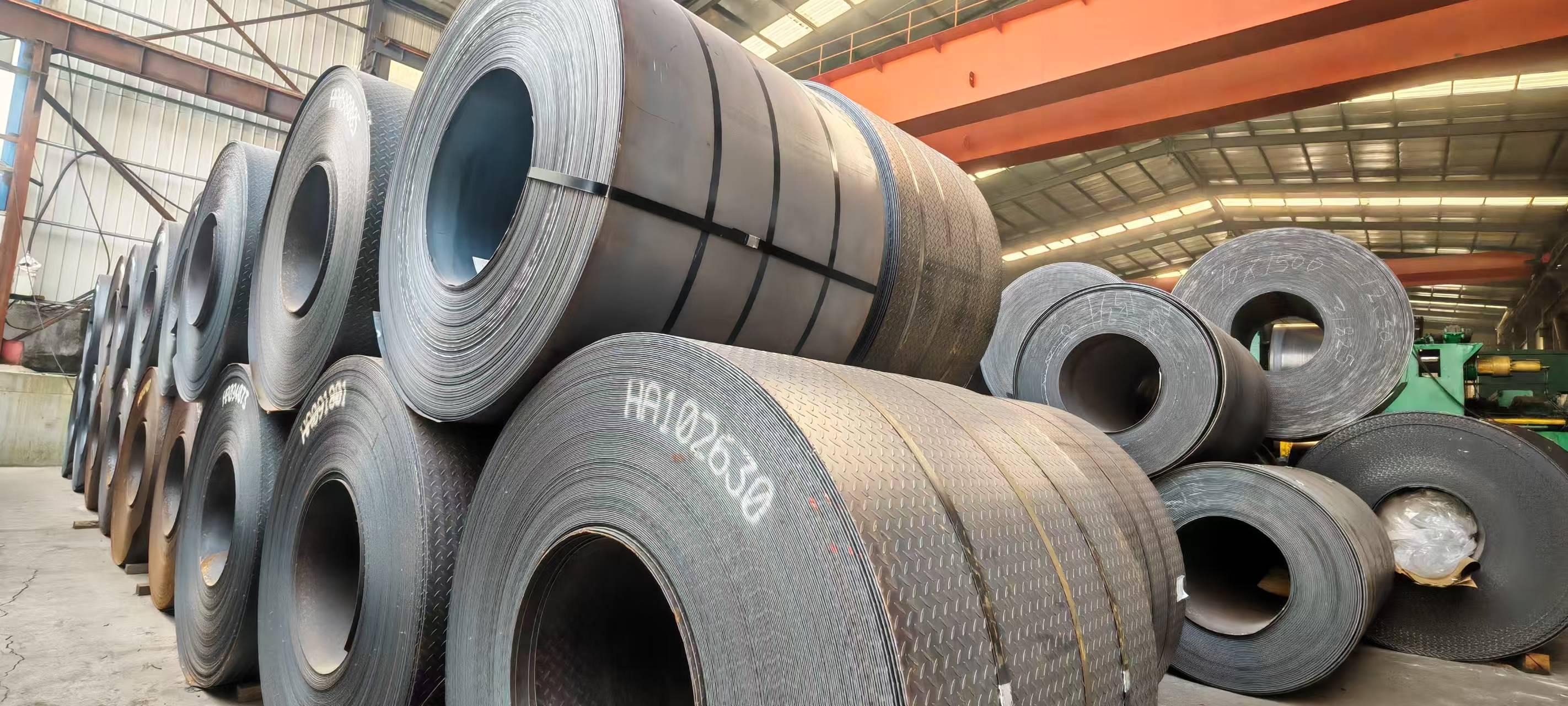
Walk into any factory and you'll see the finished product lined up, polished and ready to ship. But behind that neat row lies a maze of half-finished prototypes, rejected samples, and weeks of silent tweaking that never make it into the brochure. Buyers rarely ask about the batch that warped in the drying tunnel, or the stitching that was pulled apart and redone three times before the tension felt right. Yet that's exactly where the real quality lives.
It's in the measuring tape worn smooth from daily use, the torn-up spec sheet covered in margin notes, and the operator who can tell by the sound of a motor whether the blade needs sharpening. These aren't glamorous details. They don't show up in a showroom or a spec comparison chart. But they're what determine whether a product still looks good after six months of daily handling, or whether it starts to loosen, fade, or crack the moment nobody's watching.
Most buyers never see the extra hours spent on a seam that will be hidden inside a pocket, or the deliberate decision to use a slightly more expensive adhesive that won't yellow with age. They only experience the result: something that feels solid, lasts longer than expected, and doesn't force them to think about why. And that's the point. The highest praise for those unseen quality steps is that the buyer never has to know they're there.
Tight Tolerances From Mills That Actually Measure
Some suppliers list impressive tolerance ranges on a spec sheet, but then ship parts that drift the moment they leave the loading dock. The mills we work with take a different approach: their measurement data comes from actual in-process checks, not from a theoretical capability chart. Laser micrometers, CMMs, and air gauges are used at multiple points during a run, and operators adjust tooling based on live readings. That means the ±0.005" or tighter numbers you see aren't just aspirational—they reflect what gets measured off the line.
That constant feedback loop changes how problems get caught. Instead of discovering a drift after a batch has already been machined, these mills catch the shift while the bar stock is still spinning. The result is a more consistent part, fewer surprises at incoming inspection, and less time spent negotiating over out-of-spec shipments. When a mill actually measures, you can see it in the repeatability from one order to the next.
What Happens After You Request a Custom Grade
Once your request comes through, our team starts by reviewing the specific parameters you've outlined—whether that's a unique scale, a specialized label format, or a non-standard set of criteria. Within one business day, you'll receive a short confirmation note that either asks for clarification on any missing details or locks in the exact scope of the project. This step keeps the process from drifting and gives you a clear reference point for what's being built.
From there, the custom grade moves into a short planning phase. A dedicated specialist maps out how the requested grade will be applied, checks it against any internal consistency guidelines, and prepares a visual proof if the change affects the label or display. You'll get that proof by email, usually within two to three business days, and nothing goes into production until you've approved it. If adjustments are needed, that back-and-forth is handled directly with the same person rather than through a generic support queue.
Once approved, the custom grade is finalized and attached to your order. You'll receive an update with the finished label reference, a note on how the grade will appear in your account history, and an estimated completion date for the items that are currently in the pipeline. Any future submissions under the same account can reuse the custom grade without going through the full setup again, but you can always request changes if your needs shift.
Packing and Port Logistics Done Without Drama
The phrase “without drama” might sound like a stretch for anything involving crates, cranes, and tight sailing schedules. Yet the quietest docks and the calmest warehouses share a common trait: every movement is anticipated before it happens. Packing lists get checked against physical counts twice, not because anyone doubts the system, but because a ten-minute recount prevents a two-day port delay. That kind of pacing sets the tone long before a container ever reaches the gate.
At the port itself, the less you notice the handoffs, the better the day is going. Paperwork that matches the actual cargo down to the last carton mark means the customs officer simply stamps and waves you through. Truckers arriving within a pre-assigned window don’t idle outside the terminal. Even the twist-locks seem to click into place without a second thought. When logistics runs this smoothly, it looks almost boring—and that’s exactly the point.
Real reliability comes from treating the small things as non-negotiable. Labels placed on the correct side of every pallet, corner posts secured before the lashing crew starts, a phone call to the freight forwarder the moment a shipment leaves the warehouse floor. None of it makes headlines. But together, they mean the vessel sails on schedule, the consignee gets a clean delivery, and nobody has to explain why a container sat on the dock for three days waiting for corrected documents.
Real Support After the Bill of Lading
A bill of lading might mark the legal handoff, but the actual work of keeping a shipment moving rarely stops there. Real support means having someone who checks port congestion reports before you even notice the vessel hasn’t berthed, then calls you with a revised inland trucking window instead of leaving you to refresh a tracking page at midnight. It is the difference between a carrier that closes the file once the document is cut and one that watches the container until it is unloaded at your warehouse door.
I remember a batch of ceramic tiles that sat in Hamburg for four extra days because a customs broker’s system went down on a Friday afternoon. The forwarder didn’t just send a status update; they called the terminal gate supervisor, arranged a next-morning inspection slot, and had a standby trucker ready to pull the container before lunch on Monday. That kind of intervention is invisible on paper but is the entire reason the warehouse crew didn’t run out of stock mid-week.
After the document is signed and the vessel departs, the real test is whether the people behind the paperwork can still be reached, still make decisions, and still treat the cargo as if their own name were on the consignee line. That is not a service you can see in a rate sheet, but it is the one that decides whether the next order goes to the same desk or to a competitor down the hall.
FAQ
Most mills achieve this through large-scale production, domestic iron ore and coking coal sourcing, and continuous upgrades to rolling lines. Quality consistency is handled with inline gauges and automated surface inspection rather than relying on post-production checks alone.
Q235B and SS400 are widely stocked for general structures, while SPHC and SAE1006 are common for cold forming and pipe making. Higher strength grades like Q355B and automotive grades such as SAPH440 can be produced on request with mill test certificates.
Direct mill orders often require substantial tonnage, but many manufacturer-affiliated trading arms and export agents can split coils or offer smaller trial lots. Expect a slight price premium for trial orders under 100 tonnes.
Request the mill's actual tolerance sheet instead of relying only on standard specs. Key areas include crown, wedge, edge wave, and scale adhesion. If the coil will be pickled or galvanized later, ask for surface grade B or better and avoid excessive edge damage during handling.
Construction and infrastructure projects use HRC for beams, purlins, and welded pipes. Automotive and appliance sectors consume pickled and oiled HRC for stamping, while machinery manufacturers often buy thicker gauge coils for structural components.
ISO 9001 is the baseline for quality management. For structural steel, CE marking or JIS approval is useful depending on the destination market. If coils will go into pressure vessels or line pipe, look for API 5L or PED-related material certifications.
Standard size HRC orders usually require 20 to 35 days of rolling time after the technical agreement is signed. Ocean freight to Southeast Asia or the Middle East can add two to four weeks, so buyers should plan a total lead time of roughly 45 to 70 days.
Conclusion
Chinese HRC mills have moved far beyond the old assumption that low price means compromised quality. The reason their prices continue to hold steady or even dip while others fluctuate comes down to vertical integration, bulk raw material contracts, and relentless efficiency on the line. But what most buyers never see is the layered quality control that happens before a coil ever gets stamped for export: surface inspection under high-intensity light, ultrasonic testing at multiple points, and chemical composition verification at both the ladle and the finished strip. Mills that actually measure their tolerances often run 0.05mm thinner than the promised spec on thickness and half the allowed crown on width, which means less scrap and fewer line stoppages for downstream processors.
When a custom grade is requested, the response is not a generic datasheet. Metallurgists adjust the rolling and cooling curve, then run a trial coil within 48 hours to confirm elongation and yield strength before full production. Packing is handled with edge protectors, waterproof paper, and steel bands that survive rough seas, while port booking tracks vessel cut-offs so coils arrive without rust or handling dents. Once the bill of lading is issued, support does not end. Mill reps follow up on claim resolution, offer technical guidance for forming or welding, and can arrange replacement stock from bonded warehouses if a coil is damaged in transit. That combination of measured quality, honest pricing, and post-shipment accountability is what keeps repeat orders coming back.
Contact Us
Contact Person: Zoey
Email: [email protected]
Tel/WhatsApp: +86 15865577002
Website: https://www.sanhesteels.com