

China Special Agricultural Chains Manufacturer: Quality Solutions for Every Farm
2026-10-22
Tired of replacing cheap chains halfway through planting season? For farms that rely on specialized equipment, off-the-shelf parts rarely survive the real workload. That's why growers across the world are turning to Raydafon, a China special agricultural chains manufacturer that builds quality solutions around your specific farm needs. No more guessing games about tensile strength or sprocket fit—just chains that hold up when it matters most. Here's what you should know before your next order.
Chains That Keep Harvesters Moving Through Thick Crops
A combine pushing through dense stands of wheat or corn asks a lot from its drive system. The chains responsible for conveying cut material into the threshing area see constant abrasion from sap, dust, and plant fibers. Heavy-duty roller chains with hardened pins and bushings are often the difference between a steady harvest pace and repeated stops to clear jams. Their link plates are shaped to shed debris rather than trap it, which keeps the chain articulating freely even when the crop is wet and sticky.
In thick crops, the feeder chain bears the brunt of the work. It must grab uneven slugs of material and pull them upward without slipping. Chains designed with aggressive, self-cleaning drive lugs and precision-matched sprockets reduce the chance of bunching or wrapping. Some operators prefer chains with sealed joints that retain lubrication longer, since dusty field conditions quickly wear down open-link designs. Matching chain pitch to the specific harvester model also prevents excessive vibration that can loosen hardware over a long day.
Regular inspection matters just as much as chain selection. Checking for elongation, cracked rollers, or stiff links before the season starts helps avoid mid-field failures. Swapping out a stretched chain early keeps the sprocket teeth from wearing into a hooked shape, which would otherwise transfer damage to every new chain installed. With the right chain and a little preventive care, a harvester can maintain feeding speed through the thickest crop without the constant need to reverse or clear blockages.
Custom Pitch and Link Designs for Oddball Machines
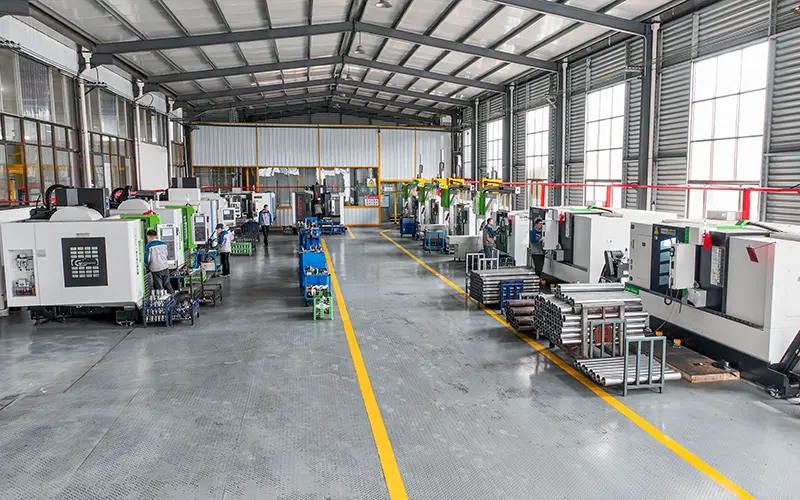
When a production line throws a non-standard spacing or an old machine refuses to accept off-the-shelf chain, the fix usually starts with the pitch. Measuring center-to-center distances across a few dozen links often reveals a dimension that was never meant to be standard—maybe something originally cut to a builder's whim or worn past any catalog match. From there, the design work is less about picking a part and more about reverse-engineering the rhythm of the machine itself.
We usually start by plotting wear patterns and tooth engagement before changing a single link profile. Sometimes the best move is not reproducing the old geometry, but quietly correcting it—thickening a link plate where fatigue cracks keep showing up, or shifting the pitch slightly so the chain seats deeper in a pocket without jamming. A few oddball machines even run better with a mixed-pitch assembly that would make a catalog engineer wince.
The goal is never to make a replacement that merely fits. It has to survive the same abuse—jerk loads, misalignment, abrasive dust—while dropping into place without forcing the operator to modify the machine. That often means machining links from alloy plate rather than stamping them, and hand-finishing the contact faces so the first dozen cycles do not chew up the new parts. Get the pitch and link profile right, and an oddball machine stops being a headache and starts being just another machine.
Salt Spray Tests? We Go Further Than That
Salt spray tests have been the industry shorthand for corrosion resistance for decades, but they rarely tell the whole story. A continuous fog of salt at a fixed temperature can flag obvious coating failures, yet it cannot replicate the thermal cycling, wet-dry transitions, or real-world chemical exposure that components actually face. That is why our validation program starts with salt spray only as a baseline — then moves into cyclic corrosion, humidity, UV, and thermal shock testing to map how materials degrade over time.
We push beyond a single pass/fail metric. By combining accelerated weathering with electrochemical impedance spectroscopy and cross-section analysis, we identify not just whether a part corrodes, but where and why. This lets our engineers adjust alloy composition, plating thickness, and sealant selection before a product reaches the field.
The result is a testing protocol that mirrors the messiness of real service conditions. Instead of relying on a 48-hour salt fog rating, our team builds custom exposure profiles for each application — from marine hardware to automotive underbody components — so the corrosion data you receive actually predicts long-term durability.
From Wet Rice Fields to Dusty Vineyards, One Chain Fits
The same roller chain that once drove a wooden thresher through flooded paddies now turns a crusher-destemmer in a sun-scorched vineyard. It is not the chain that changed, but the hands that tension it, the grit it carries, and the rhythm it learns. Farmers swap sprockets not for a different principle, but for a different patience: one harvest waits in standing water, the other in dust that hangs like smoke.
You can hear the difference before you see it. In rice country, the chain runs wet and muffled, slapping through mud and straw with a dull, dependable hiss. In the vineyard, it ticks and rattles over dry bearings, each link throwing off tiny puffs of rust-colored dust. Yet the pitch, the roller diameter, the fatigue life under shock load—these stay stubbornly the same. A single chain number, stamped on a side plate, crosses from monsoon to drought without asking permission.
What keeps it universal is not clever engineering but honest wear. A rice field chain stretches from constant moisture and abrasive silt. A vineyard chain stretches from heat cycles and grape acid. Both failures teach the same lesson: replace before the elongation reaches three percent, grease the pins daily, and never let a worn sprocket chew a new chain. One maintenance manual, written by two different harvests, reads exactly alike.
The Real Cost of a Cheap Chain Shows Up at Harvest
When a combine is chewing through acres and the grain cart is running nonstop, a cheap drive chain doesn't just wear out—it stretches, loosens, and starts slapping the guards. You might notice a faint rattle at first, then a skip, and then the header stops feeding while the sun is still high and the dew is long gone. That's when the real bill arrives.
A broken chain at harvest is never just the price of the chain. It's the rented cart sitting idle with the auger half full, the custom operator checking his watch, and a field crew trying to find a master link in the toolbox. Moisture tests slide past the ideal window, and the crop stands another day in weather that can turn. You don't pay for the cheap chain at the parts counter; you pay for it in dockage, downtime, and lost sleep.
Quality roller chain is built with consistent pitch and hardened pins that don't gall under load. It costs more upfront, but it bends with the drive instead of fighting it. By the time the last truck rolls out, the difference is measured in hours, not dollars—and harvest only gives you so many hours.
Straight From Our Factory to Your Farm Gate
The trip from our factory floor to your farm gate covers one road and one handoff: ours to yours. No third-party warehouse, no repricing along the way. You place the order, we pack it, and the same truck that leaves our loading dock is the one that backs up to your feed room or shed.
Short routes keep us honest. If a batch of mineral mix arrives clumped from humidity, or a bag tears on a pallet corner, you won't have to file a claim through three layers of customer support. You call the number on the delivery slip and talk to someone who actually saw your order being built. That feedback goes straight back to the mixing room, not into a monthly report.
For you, it means fewer surprises. You'll know the driver's name, roughly when the truck will show up, and where to find us if a storm delays a load. It's not a retail transaction with a faceless brand; it's a practical arrangement between people who both get up early to keep livestock fed and land working.
FAQ
They focus on heavy-duty drive chains for combines, balers, and other harvesting equipment, along with conveyor chains for grain handling and manure spreaders. The range also includes custom pitch and attachment options to match uncommon older machinery.
Rather than offering one-size-fits-all parts, the manufacturer works from detailed load ratings and wear patterns shared by farmers. This allows them to adjust heat treatment and pin hardness so a chain survives local soil conditions, whether it is sandy, clay-heavy, or rocky.
The main advantage is direct access to the forging and assembly process. That means shorter lead times for non-standard lengths, the ability to order small batches without inflated costs, and clearer communication about material specs than going through multiple distributors.
Each batch undergoes tensile testing, link-by-link dimensional checks, and salt spray corrosion tests before packing. The factory keeps sample chains from every production run for two years, so any field failure can be traced back to raw material lot numbers or heat treatment records.
Yes, that is a core part of the service. Farmers can send a worn sample or just the pitch and roller diameter, and the engineering team will reverse-engineer a replacement chain with matching breaking strength and pin retention, even if the original model was discontinued decades ago.
They serve both by separating product lines: a standard-duty series for compact tractors and small conveyors, and a premium series with hardened pins and sealed joints for high-horsepower harvesters running around the clock. The pricing reflects the service life, so a small farm does not pay for capacity it will never use.
Chains are coated with a rust-preventive film, then coiled into reinforced wooden crates with moisture-absorbing liners. For large orders, the crates are palletized and labeled with part numbers on the outside, making it easy for customs brokers and farm mechanics to identify contents without unwrapping everything.
Farmers can send photos or short videos of chain wear or breakage, and the manufacturer's engineers will diagnose whether the issue is tension, sprocket wear, or material fatigue. Replacement links and repair kits are stocked for the most common models, and emergency air freight can be arranged during harvest season.
Conclusion
Running a harvester through thick, wet crops puts a level of strain on drive chains that most generic parts simply can't handle. That's why our factory in China focuses on the specific demands of agricultural work rather than just selling off-the-shelf sizes. We build chains with custom pitch and link designs for oddball machines, so you don't have to modify sprockets or settle for a sloppy fit. Whether it's a rice field after heavy rain or a dusty vineyard at peak heat, the same chain has to keep tension, resist grit, and stay quiet under load. We test beyond standard salt spray hours because rust on a parked machine is one problem, but wear from abrasive soil and constant flexing is another. The real cost of a cheap chain doesn't show up until harvest stalls and you're losing daylight.
By shipping straight from our factory to your farm gate, we remove the middleman markup that often forces buyers into lower-grade steel. That direct line also lets us respond quickly when a machine needs a non-standard length or a heavier side plate. Every chain we send out is built with the understanding that downtime during harvest isn't an inconvenience, it's a direct hit to your yield. From keeping harvesters moving through thick crops to handling the oddball machines that other suppliers avoid, our approach is simple—match the chain to the work, not the other way around. You get quality solutions that hold up season after season, whether the field is wet, dry, or somewhere in between.
Contact Us
Contact Person: Mr. Shen
Email: [email protected]
Tel/WhatsApp: +86-574-87168065
Website: https://www.transmissions-china.com/