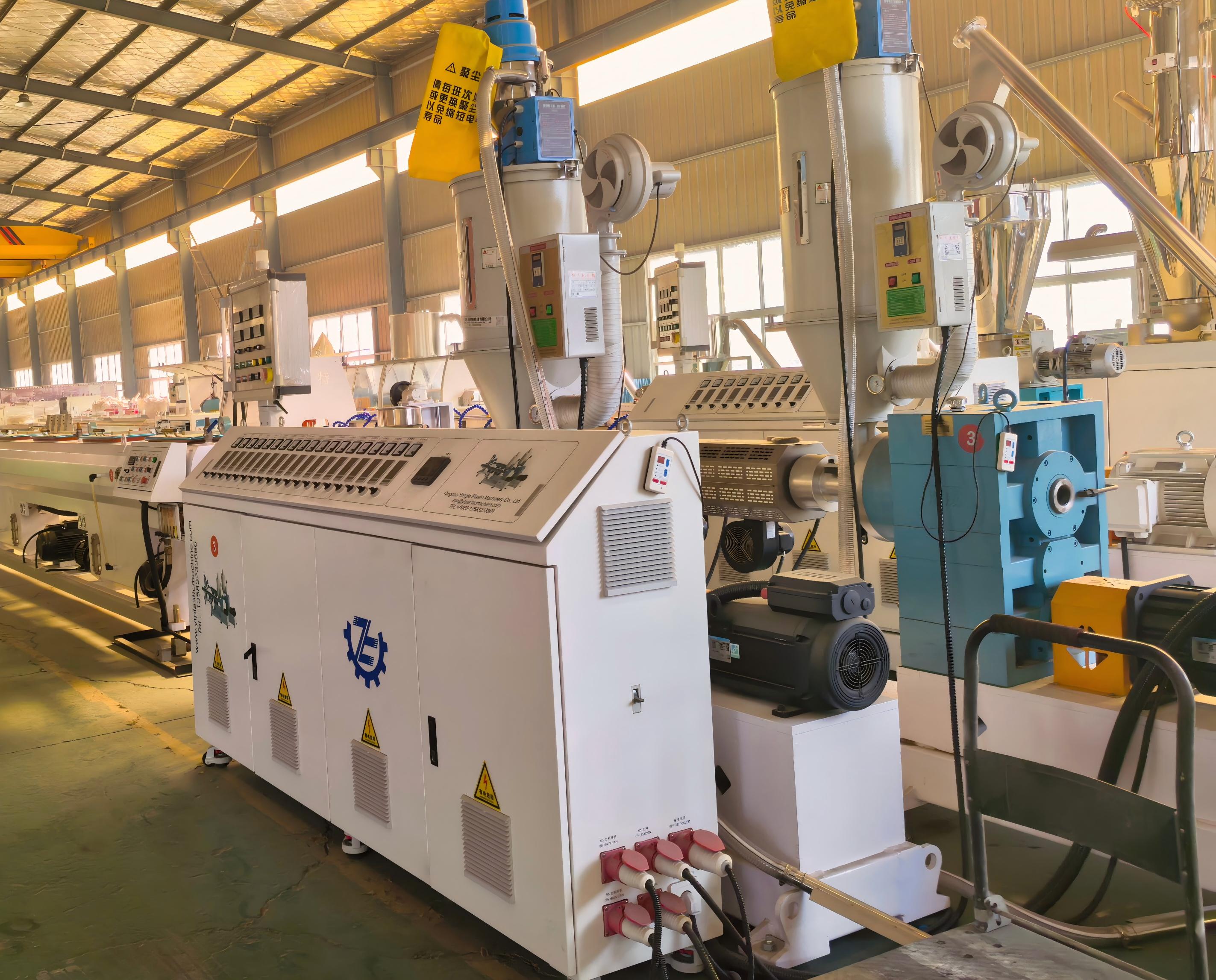

Wood Plastic Machine Solutions for Efficient Production Lines
2026-10-10
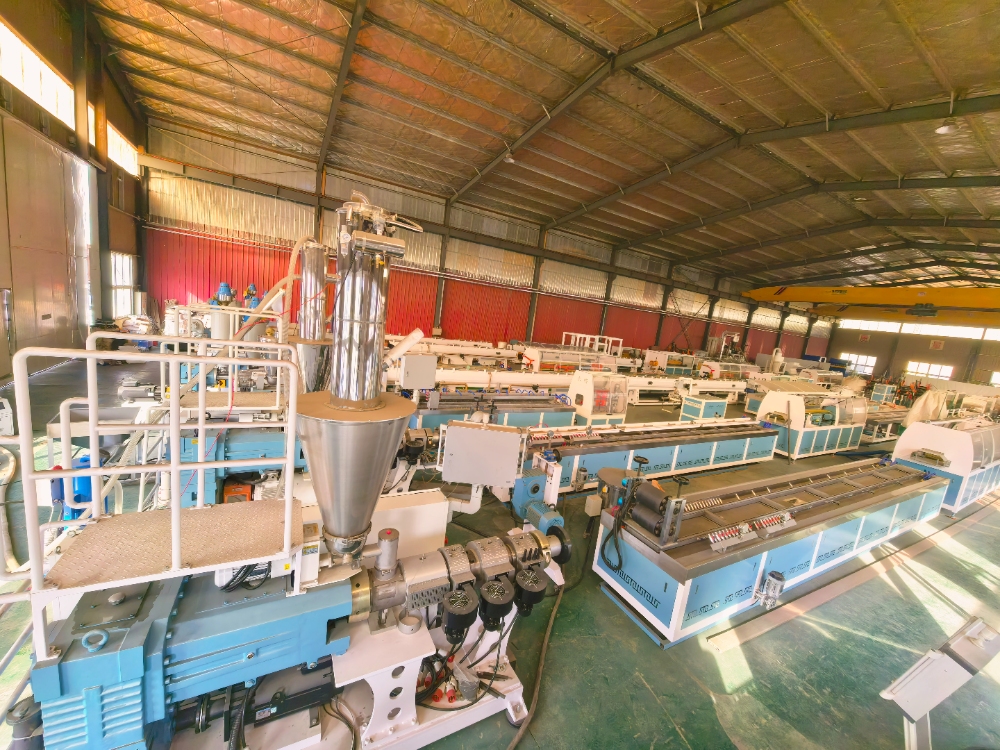
When production lines stall, the usual fix isn't another patch—it's rethinking the material flow itself. Yongte brings wood plastic composite machinery that turns raw blends into consistent boards, profiles, and pellets with less downtime and fewer rejected batches. Curious how a single integrated system can replace three separate processes? Read on.
Getting the Wood-to-Polymer Ratio Right Before Extrusion
Nailing the wood-to-polymer ratio before the material ever reaches the screw is less about hitting a fixed number and more about reading what your specific furnish needs. Too much wood and the melt becomes brittle, starving the barrel for flow while scorching fines collect around the die. Too little and you lose the very texture and cost advantage that drew you to wood-plastic composites in the first place. A practical starting point sits near 50 to 60 percent wood by weight for most PE or PP-based decking profiles, but that window shifts once you factor in particle geometry, moisture content, and whether you are using a coupling agent. Spend the time upfront to run small-batch melt flow tests on your actual blend rather than borrowing a ratio from a datasheet.
Moisture is the quiet saboteur in this equation. Wood fiber straight from the grinder can carry six to eight percent water, and even kiln-dried material creeps back up in humid storage. Push damp filler into the extruder and you get steam pockets, surging at the die, and a finished part riddled with micro-voids that kill impact strength. A ratio that looks perfect on paper will process like garbage if the wood is not dried below one percent before blending. The real skill is adjusting the ratio on the fly, dropping wood loading a point or two when the ambient humidity spikes or when a new batch of maple shows finer particle distribution than the oak you calibrated for.
There is also a hidden lever many operators ignore: the polymer melt index. A high-flow HDPE lets you push wood content higher without stalling the screw, while a fractional-melt resin will fight you past forty percent. Before locking in a recipe, check whether your extruder has enough torque margin and venting capacity for the ratio you are chasing. It is better to run a slightly lower wood fraction with clean, stable output than to force a sixty-five percent blend that smokes out the vacuum port every afternoon.
Screw Designs That Handle High Wood Loading
High-load wood connections punish shallow threads. Screws built for this work pair a steep primary thread with a secondary thread that starts lower on the shank; the secondary engages only after the head contacts the first member, pulling the joint tight instead of just driving through it. Fully threaded shanks up to the head remove the unthreaded shear plane that snaps ordinary screws in multi-ply assemblies.
A true auger tip or a Type 17 slash point is the first sign of a screw meant for dense engineered lumber. The self-tapping tip clears chips and reduces splitting, but the real load handling comes from a thickened shank below the head and a smooth transition section in structural screws that lets two members draw together without bridging. Some designs also mill underhead cutting ribs to countersink the head without tearing fibers, keeping the bearing surface flat against the plate.
Material choice matters as much as shape. Load-rated wood screws are typically heat-treated carbon steel with a corrosion-resistant coating that will not gall in wet service, and their heads are either wide bearing washer heads or hex flanges that spread pressure over more wood surface. Torx or hex drives survive high torque better than Phillips, and some designs include a head marking that indicates the screw’s designated load class so the connection can be verified at a glance.
Controlling Melt Temperature Without Overshearing
Effective temperature management in polymer processing often hinges on a delicate balance: applying enough shear to homogenize the melt without pushing it into degradation territory. Overshearing generates excessive frictional heat, which can raise melt temperature beyond the resin's recommended range, leading to color shifts, viscosity breakdown, or even charring. Processors who rely solely on screw speed adjustments to hit a target melt temperature frequently find themselves walking a tightrope—reduce speed too much and mixing suffers; increase it slightly and the melt overheats.
One practical alternative is to use barrel temperature profiling in combination with screw design modifications. By strategically lowering the rear and middle zone setpoints while maintaining a slightly higher front zone, you can precondition the polymer with gentle conductive heat before it enters the high-shear metering section. This shifts the thermal burden away from viscous dissipation alone. For instance, a slightly deeper metering channel or a longer compression zone can deliver the same degree of melting with lower shear rates, effectively decoupling temperature rise from screw RPM.
Molders and extruders also benefit from monitoring melt temperature directly at the nozzle or die, rather than inferring it from barrel thermocouples. A melt probe or infrared sensor reveals how much shear heating is actually occurring, allowing fine-tuning of back pressure, screw recovery speed, or feed throat cooling. Sometimes the simplest fix is reducing screw rotation during plastication while extending the cycle slightly—this lowers shear work per unit time without sacrificing melt quality, keeping temperature within a narrow window where the resin remains stable and consistent shot after shot.
Calibration and Cooling for Consistent Board Dimensions
Calibration for board dimensions goes beyond simple scale factors. It starts with characterizing how the laminate, copper foil, and glass weave respond to heat—each material has its own coefficient of thermal expansion, and resin-rich areas can move differently from glass-heavy zones. Rather than applying a single global offset, process engineers often maintain per-axis scaling values and update them after every material lot change, because even nominal differences in prepreg resin content shift the final size by a few mils.
Cooling is equally decisive. If the board exits the lamination press and cools too quickly, the core and surface layers contract at different rates, leaving residual stress that later shows up as twist or edge curl. A stepped cooling profile, where the temperature drops at a controlled rate through the glass transition region, lets the stack reach dimensional equilibrium before further handling. This practice, combined with post-cooling measurement on a flat granite surface, reveals whether calibration offsets need another correction before the next run.
Finally, use inline measurement after cooling to close the loop. An optical scanner or laser micrometer can capture length, width, and diagonal differences within minutes, and those values feed directly back into the calibration table. This turns dimensional consistency from a reactive correction into a routinely tracked variable, so changes in cooling rate, material batch, or press pressure are reflected in the next board rather than discovered in final inspection.
Tooling Changeovers in Under an Hour
Plenty of shops still treat tooling changeovers as a fixed cost—something that eats forty minutes or an hour and simply has to be absorbed. But under an hour isn’t a stretch target; it’s usually a sign that someone finally separated work that truly needs the machine stopped from everything else. Staging the next tool on a prepped cart, preheating molds or dies, checking offsets ahead of time, and keeping quick-release clamps within arm’s reach can cut the clock dramatically before the first bolt is touched.
The real bottleneck is rarely the physical swap—it’s the wandering. A tool change stalls when someone has to leave the area for a socket, wait on a fork truck, or page a programmer for a setting nobody wrote down. Video a few changeovers and you’ll see the pattern. Move those decisions and retrievals outside the downtime window, then make the remaining sequence boring and repeatable. Torque stripes on fasteners, color-coded hydraulic lines, and shadow boards for tooling all sound small, but they remove the pauses that quietly push a changeover past the hour mark.
Hitting under an hour also changes how teams behave. The target is close enough to keep everyone’s attention, yet demanding enough to expose poor organization. Early attempts might take longer while people get used to the new sequence, but after a handful of repetitions most crews start beating the goal. What begins as a time-saving exercise turns into a more predictable schedule and a shop floor where changeovers stop feeling like an interruption and start feeling like a routine.
Data Points That Signal Maintenance Needs
Vibration signatures often hold the earliest clues. Instead of watching overall vibration levels, pay attention to changes in the high-frequency band or the emergence of sidebands around gear mesh frequencies. A small jump in the kurtosis value can indicate developing spalling on a bearing race, long before it becomes audible or visible.
Temperature readings become far more useful when you track their rate of change and distribution. A slow, steady climb on one bearing housing while the rest stay stable suggests lubrication breakdown or slight misalignment. Thermal imaging can reveal hot spots on electrical connections or blocked cooling fins that a single thermocouple would miss entirely.
Fluid analysis data, especially particle counts and moisture levels, often tells a story that operators overlook. A sudden spike in ferrous wear particles combined with rising water content points to internal corrosion and accelerated wear, even if the machine still runs smoothly. Tracking the trend of these numbers, rather than waiting for an alarm threshold, lets you schedule downtime on your terms.
FAQ
They work well with wood flour, rice husks, bamboo fiber, and various recycled plastics like PE, PP, and PVC. The feeding system adjusts to different bulk densities so you can switch recipes without rebuilding the line.
Most setups include a pre-drying stage and a vented extruder barrel. That combination pulls moisture out before the melt enters the die, which keeps board density and surface finish stable even if incoming feedstock isn't perfectly dry.
Yes, if you choose a modular downstream. Quick-change calibrators and a movable haul-off let you go from a wide decking board to a narrow fence slat in under an hour. The extruder itself stays the same.
Screw and barrel wear matter most because wood fiber is abrasive. Plan to inspect the screws every 800 to 1000 running hours and keep spare screens for the melt filter. Daily checks on vacuum pump seals and die lip buildup prevent most unplanned stops.
They can be, mainly due to pre-drying and the higher torque needed for filled melts. However, modern drives with closed-loop barrel cooling typically cut energy use by 15 to 20 percent versus older open-loop designs, which shows up quickly on utility bills.
Ask about trial runs with your own material mix and whether the supplier offers on-site commissioning. A vendor that can adjust screw geometry after the trial will save more downtime than one that only ships standard configurations.
For plants that compound their own wood plastic pellets, a side-feed twin-screw extruder with a strand pelletizer works well. It lets you control filler content in-house and store uniform pellets for later profile extrusion, which helps when running multiple shifts.
Underestimating material bridging in the hopper and overheating at the die are the usual ones. Lab-scale tests don't show how wood fiber compacts under full head pressure, so a larger feed throat and a longer die land are often needed on the production machine.
Conclusion
A truly efficient wood plastic line starts well before the extruder. Operators who get the wood-to-polymer ratio right ahead of mixing tend to avoid most downstream headaches, and that usually means accounting for moisture and particle size rather than trusting a fixed recipe. Screw designs that handle high wood loading play a big part too; modified barrier flights and deeper feed channels let lines run up to 70% wood fraction without starving the metering zone. But high filler levels bring more shear heat, so controlling melt temperature without overshearing becomes a balancing act. Sometimes dropping screw RPM by just a few points on one barrel segment cuts melt temperature more cleanly than lowering every setpoint at once.
Once the melt leaves the die, calibration and cooling decide whether boards come out straight and within tolerance. Vacuum sizing and multi-zone spray cooling do a better job than a simple water bath, and a bit of differential cooling can correct slight bowing before it locks in. Tooling changeovers in under an hour usually come from preheated adapters, quick-clamp die bodies, and a well-organized cart, not from rushing the crew. And the data points that signal maintenance needs tend to show up quietly: rising specific energy per kilogram, drifting melt pressure at constant output, or a widening barrel temperature spread. Watching those trends allows a shift lead to schedule a screw pull or screen change instead of waiting for an unplanned stoppage.
Contact Us
Contact Person: Ms Qin
Email: [email protected]
Tel/WhatsApp: 8613583233866
Website: https://www.yongteplast.com