

How Are Folding Container Houses Shaping the Global Demand for Flexible Construction?
2025-12-18
Article Abstract
Folding Container Houses have emerged as a highly adaptable building solution across residential, commercial, and industrial scenarios. This article provides a comprehensive professional overview of Folding Container Houses, focusing on how they are designed, transported, deployed, and integrated into modern construction systems. Detailed product parameters, structural explanations, real-world use cases, and frequently asked questions are presented to support informed decision-making for global buyers, developers, and project planners.
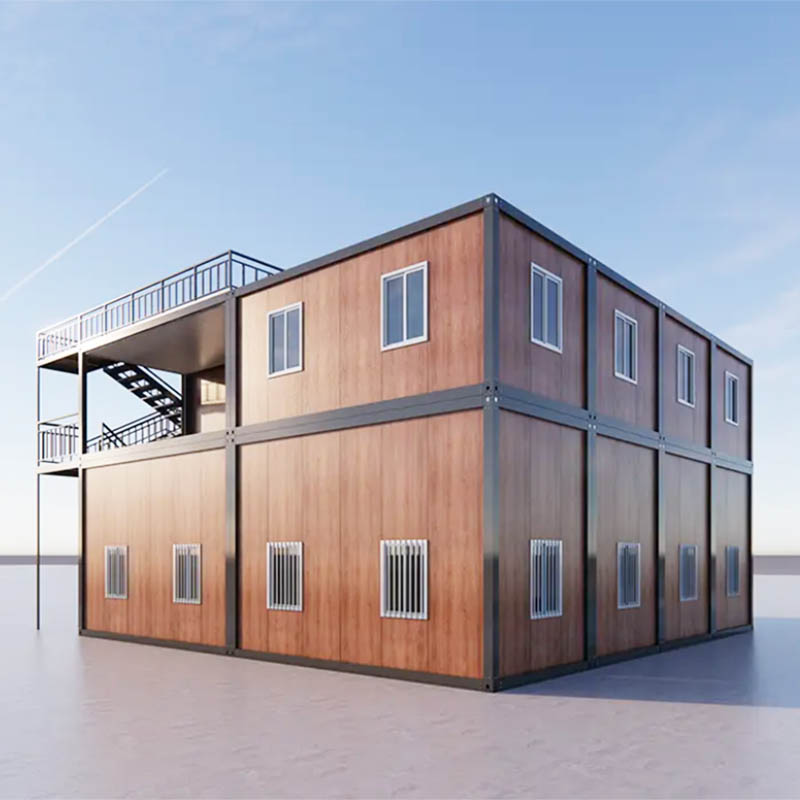
Table of Contents
- 1. How Does a Folding Container House Work as a Modular Building System?
- 2. How Are Folding Container Houses Engineered for Transport, Assembly, and Stability?
- 3. How Can Folding Container Houses Be Applied Across Different Industries?
- 4. How Is the Folding Container House Market Expected to Evolve?
1. How Does a Folding Container House Work as a Modular Building System?
A Folding Container House is a prefabricated structural unit designed to collapse into a compact form for transportation and expand on-site into a fully functional building. The core concept centers on efficiency: reducing logistics costs while maintaining structural integrity and spatial usability.
Unlike traditional fixed container buildings, folding models utilize hinged wall panels, reinforced frames, and integrated flooring systems that allow the unit to be deployed rapidly with minimal equipment. Once unfolded, the structure forms a rigid, weather-resistant enclosure suitable for short-term or long-term occupancy.
The central purpose of a Folding Container House is to provide a standardized yet customizable building solution that can be repeatedly deployed, relocated, or reconfigured. This makes it particularly suitable for temporary housing, workforce accommodation, emergency response facilities, and mobile commercial spaces.
Core Product Parameters
| Parameter | Specification Range |
|---|---|
| Expanded Dimensions | Approx. 5800 × 6300 × 2480 mm |
| Folded Dimensions | Approx. 5800 × 2200 × 2480 mm |
| Main Frame Material | Galvanized Steel Q235 / Q345 |
| Wall Panels | EPS / Rock Wool / PU Sandwich Panels |
| Roof Load Capacity | ≥ 50 kg/m² |
| Floor Load Capacity | ≥ 250 kg/m² |
| Insulation Performance | Adaptable to -20°C to 50°C environments |
| Installation Time | 15–30 minutes per unit |
These parameters demonstrate how Folding Container Houses balance portability with durability, allowing them to meet international building and transportation standards.
2. How Are Folding Container Houses Engineered for Transport, Assembly, and Stability?
Engineering considerations for Folding Container Houses focus on three critical phases: logistics, deployment, and operational stability. During transport, the folded configuration significantly reduces volume, enabling multiple units to be shipped in a single container or flatbed truck.
Structural frames are reinforced at hinge points to prevent fatigue from repeated folding cycles. Wall panels are pre-installed with insulation, wiring conduits, and window cutouts, ensuring that unfolding does not compromise performance.
On-site assembly typically requires no heavy machinery. A small team can complete installation using basic lifting tools, as the roof, walls, and floor are integrated into a single mechanical system. Once deployed, locking mechanisms secure the structure, ensuring resistance to wind loads and seismic activity.
Frequently Asked Questions
Q: How long does it take to install a Folding Container House?
A: Standard units can be fully deployed within 15 to 30 minutes, depending on site conditions and interior configuration. Electrical and plumbing connections may extend total setup time.
Q: How durable is a Folding Container House after multiple deployments?
A: When manufactured with reinforced steel frames and industrial-grade hinges, Folding Container Houses are designed for repeated folding cycles without structural degradation.
Q: How does weather resistance compare to conventional prefabricated buildings?
A: Properly sealed sandwich panels and galvanized frames provide comparable resistance to rain, wind, and temperature fluctuations, meeting common international standards.
3. How Can Folding Container Houses Be Applied Across Different Industries?
The adaptability of Folding Container Houses enables their use across a wide range of industries. In construction and mining, they are commonly deployed as site offices, worker dormitories, and safety stations. In humanitarian contexts, they function as rapid-response shelters, clinics, and classrooms.
Commercial applications include pop-up retail stores, exhibition booths, and mobile service centers. The standardized dimensions allow easy stacking or combination into multi-unit complexes, expanding usable space without increasing logistical complexity.
Public-sector adoption has increased due to the ability to relocate units as project requirements change. This flexibility reduces long-term infrastructure investment while maintaining operational readiness.
4. How Is the Folding Container House Market Expected to Evolve?
Global demand for Folding Container Houses is expected to grow alongside trends in urbanization, infrastructure mobility, and sustainable construction. Manufacturers are increasingly integrating renewable energy systems, smart monitoring, and enhanced insulation materials into folding designs.
Standardization of components is also improving cross-border compatibility, enabling faster procurement and deployment for international projects. As regulatory frameworks adapt to modular construction, Folding Container Houses are becoming a recognized solution rather than a temporary alternative.
Additional Frequently Asked Questions
Q: How customizable are Folding Container Houses?
A: Interior layouts, insulation types, window placement, and utility systems can be customized to meet residential, commercial, or industrial requirements.
Q: How do Folding Container Houses support sustainable construction goals?
A: Reduced material waste, lower transportation emissions, and reusability contribute to improved environmental performance compared to traditional builds.
Q: How long can a Folding Container House remain in service?
A: With proper maintenance, service life commonly exceeds 15–20 years, depending on environmental exposure and usage patterns.
As a recognized supplier in the modular housing sector, Yilong continues to support global clients with Folding Container House solutions engineered for reliability, efficiency, and scalable deployment.
For project consultations, technical specifications, or customized solutions, please contact us to discuss how Folding Container Houses can support upcoming construction or infrastructure needs.